

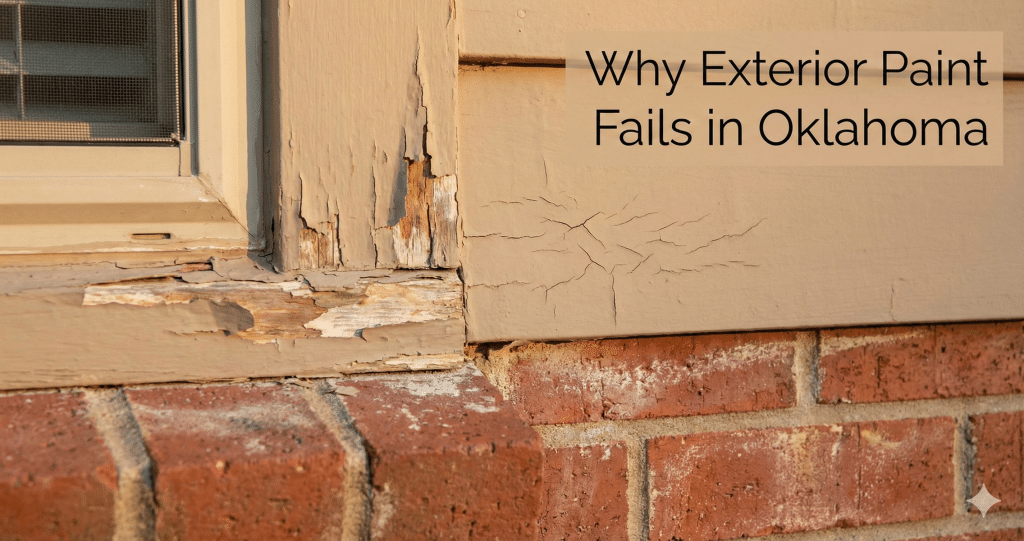

One of the questions we hear most often is why some homes seem to fade or peel far sooner than expected. Homeowners will say, “The last paint job only lasted a few years. What happened?” Truth is, our climate here in Oklahoma is harder on paint than many people realize. Heat, sun, wind, dust, and storms all work together to wear down a finish long before its time.
The good news is that once you understand why paint fails, you’re in a better position to choose the right products and make sure the job is done right.
I’ll explain why exterior paint fades, cracks and peels and how to get the most out of your next exterior paint job.
1. Fading: Oklahoma’s Sun Is Stronger Than It Looks
Our sunlight is intense, especially on south- and west-facing walls. UV rays break down the color pigments and the “binders” that hold the paint film together. That’s why you’ll often see:
- Washed-out color
- Patchy fading
- “Chalking” (a powdery residue on your hand)
- Dark colors turning uneven or dull
Certain pigments fade faster than others, especially cheaper exterior paints. That’s one reason we use higher-quality coatings from Sherwin-Williams and Benjamin Moore—they have stronger UV resistance and better color retention over time.
If fading is showing up across your home, it may also be a sign the paint is reaching the end of its lifespan.
2. Peeling: When the Paint Stops Sticking to the Surface
Peeling usually isn’t about the paint, it’s about the surface underneath. And in most cases, it comes back to one thing:
Poor prep work.
If the surface wasn’t cleaned, scraped, sanded, primed, or caulked properly, the new coating never had a fair shot. Moisture sneaks in, the paint lifts, and before long you’re dealing with entire sheets of paint sloughing off. It may cost more to do proper prep us front, but in the long run it always make sense.
Common causes of peeling include:
- Painting over dirt or chalk residue
- Skipping primer on bare wood
- Painting over failing paint
- Trapped moisture from unsealed gaps
- Using low-quality or mismatched products
Oklahoma-Specific Causes of Peeling
Because our weather changes quickly, Oklahoma homeowners often wash their homes or have sprinklers running, and then the surface doesn’t dry fully before painting. Even one damp board can cause peeling years later.
Freeze-thaw cycles also push moisture deeper into siding and trim, forcing the coating to release.
3. Cracking: Heat, Wind, and Old Paint Working Against You
Cracking usually starts small—tiny hairline fractures in the paint film. Most homeowners don’t notice them until the cracks widen and paint begins to split or curl.
Cracking can come from:
Aging paint
As paint gets older, it becomes brittle. Oklahoma’s combination of hot summers and cold winters speeds that process along.
Excessive heat
When the sun bakes siding all day, paint can expand and contract repeatedly. Lower-quality coatings can’t keep up, so the film begins to fracture.
Poor adhesion beneath the surface
Prepping over peeling paint leaves unstable layers underneath, leading to cracking on top.
Wind exposure
Oklahoma’s strong winds move dust and debris across your paint surface like sandpaper. Over time, this wears down the protective coating.
If you’re seeing cracks in multiple areas, your home is probably overdue for maintenance or a full repaint.
4. Moisture
Moisture is one of the biggest reasons paint peels or cracks in Oklahoma. It sneaks in through:
- Open gaps in caulk
- Exposed nail holes
- Unprimed wood
- Loose siding
- Wood rot
- Faulty window flashing
Once moisture gets behind the paint, it pushes outward until the film breaks.
This is why caulking and sealing matter so much. A high-quality sealant expands and contracts with the weather, keeping moisture out and your paint intact for years.
5. Inferior Products: Not All Exterior Paint Is Equal
Cheaper paint tends to:
- Fade faster
- Crack more easily
- Absorb more moisture
- Offer weaker UV protection
- Lose color richness sooner
For Oklahoma homes, you really want paint that can stand up to constant sun and frequent storms. Products like Sherwin-Williams Emerald or Benjamin Moore Aura tend to outperform budget paints by a wide margin.
6. The Most Common Thread: Rushed or Incomplete Prep
You can have the best paint in the world, but if the prep work falls short, the job won’t last.
Professional prep should include:
- Washing
- Scraping
- Sanding
- Priming bare wood
- Caulking
- Repairs
- Masking
- Final inspection
Skipping even one step can lead to early failure. Prep is where the longevity of your paint job is truly determined.
7. How to Tell If Your Paint Is Failing Now
Here are signs your exterior is beginning to break down:
- Color looks washed-out or uneven
- Paint rubs off as powder
- Peeling or bubbling
- Bare wood or dark stains showing
- Cracks forming along trim or siding
- Caulk pulling away from seams
If you’re seeing several of these, it may be time to take a closer look.
Protecting Your Home Starts With Understanding the Causes
When you understand why paint fails, you can avoid the frustration and expense of frequent repainting. Choosing the right products, allowing enough time for proper prep, and working with a team that understands Oklahoma weather goes a long way toward protecting your home.
And when the job is done right, you should expect your paint to last—not fail early.
Ready for a Long-Lasting Exterior Paint Job?
If your home is showing signs of fading, peeling, or cracking, we’re happy to take a look and give you a clear, detailed estimate. Our team walks you through what your home needs—and why—so you feel confident in every step.
Visit our main page for exterior painting in Oklahoma City to schedule your estimate.
