When an HOA board hires a painter, the board inherits everything that painter does. Every missed day, every trampled flower bed, every resident complaint lands on the board’s desk, and board members are volunteers with their own jobs. So when the board at The Crossing, a townhome community in Edmond, decided their property was due for a repaint, the real question wasn’t the color. It was: who can we trust with this?
The board president found us on Google. We were one of four painting companies invited out to look at the project. One of the four never sent a quote at all. Another sent an estimator who walked the property, took in the size of it, and admitted his company wasn’t equipped to handle a job like this.
We were, and this is the story of how it went.
The Project at a Glance
Location
The Crossing, a townhome community in Edmond, OK
Scope
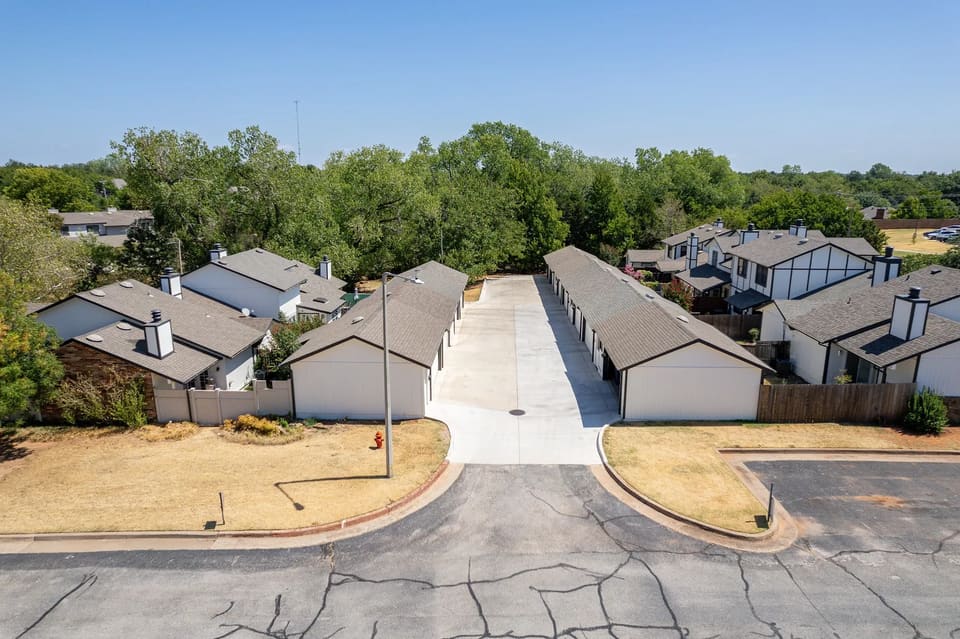
Three buildings of 5 to 7 units each, plus their detached garages: all siding, trim, and garage doors. Phase one of a building-by-building plan for the whole property.
Products
Sherwin-Williams SuperPaint in a two-tone scheme: off-white siding with Iron Ore for the dark contrast
Timeline
About two months, start to finish
A Building-by-Building Plan the Budget Could Live With
The board originally had us quote four buildings. The whole property was due, and their plan was sensible: repaint it in phases, a few buildings at a time, until every unit matched. We settled on three buildings for this year purely for budget reasons, and nobody had to pretend otherwise. A phased plan an HOA can actually afford beats an all-at-once plan that strains the reserves.
These buildings are mostly siding and trim with brick and stone accents below, which means an enormous amount of paintable surface. We painted all of it: siding, trim, fascia, and the garage doors on every detached garage. The front entry doors belong to the individual residents under this HOA’s rules, so those stayed as they were.
Before and After
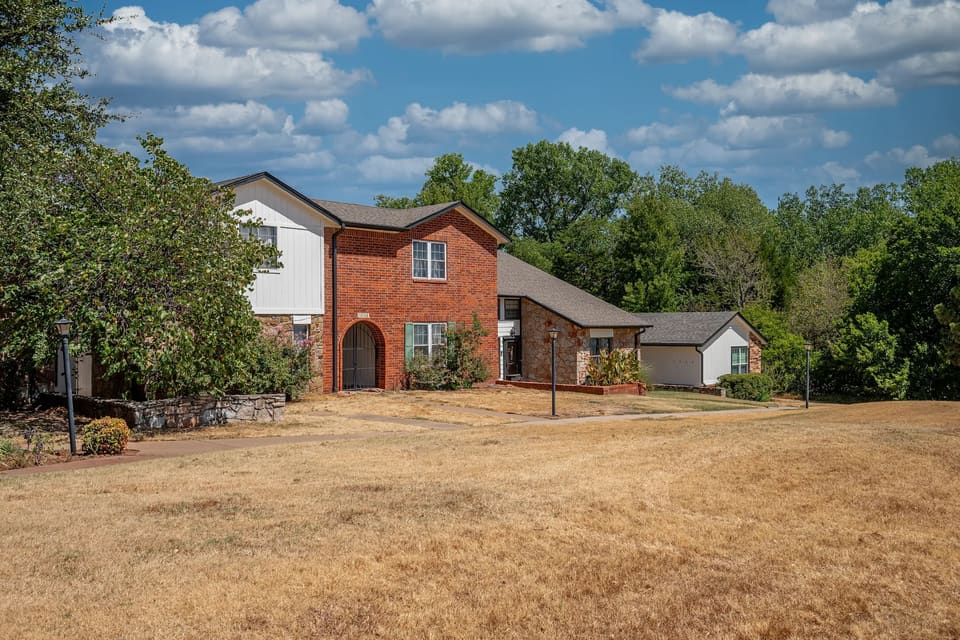
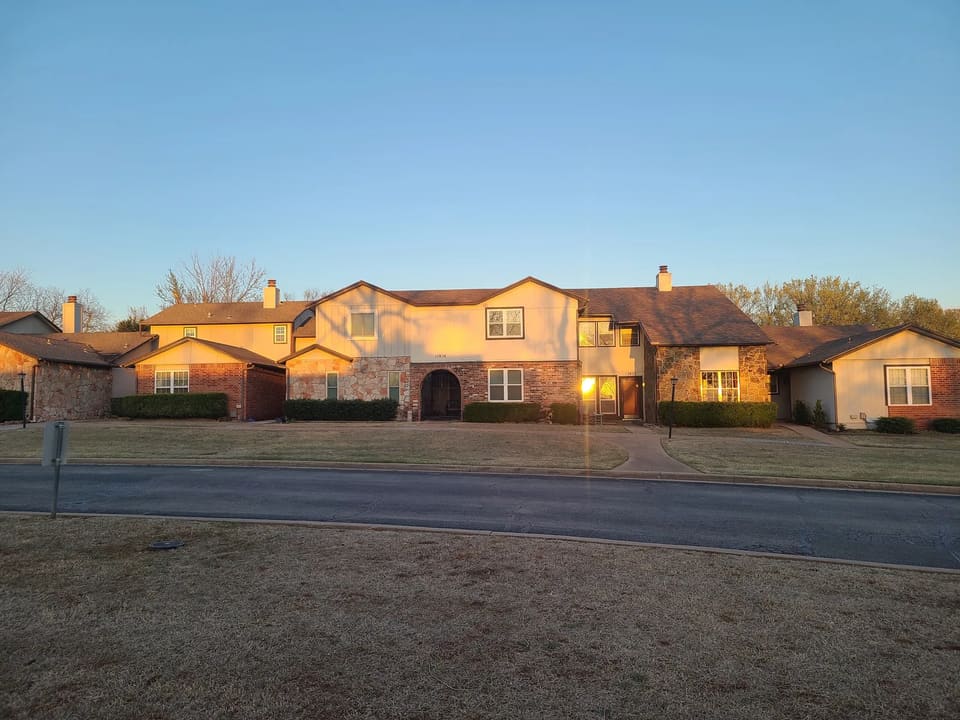
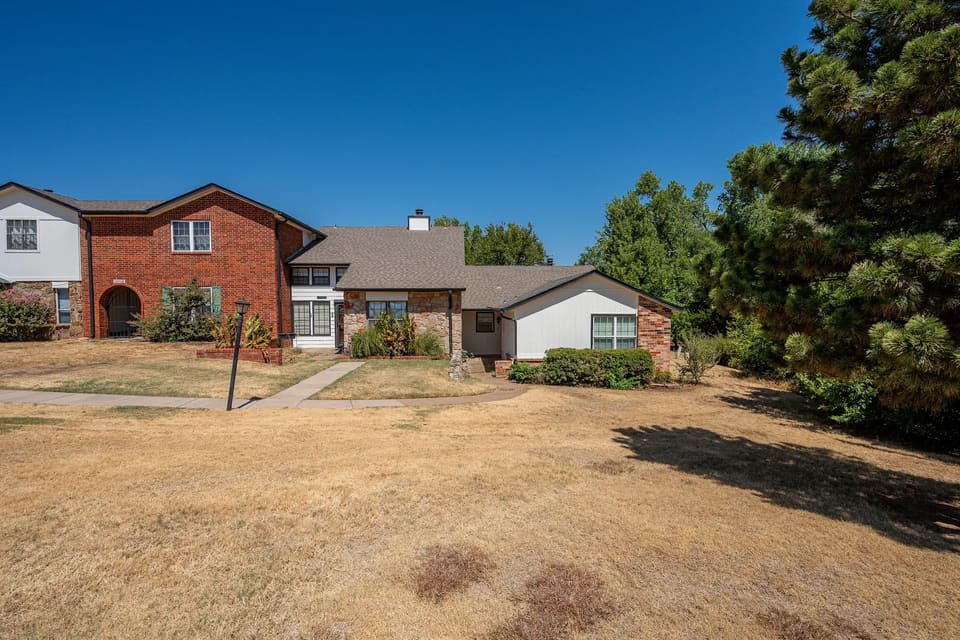
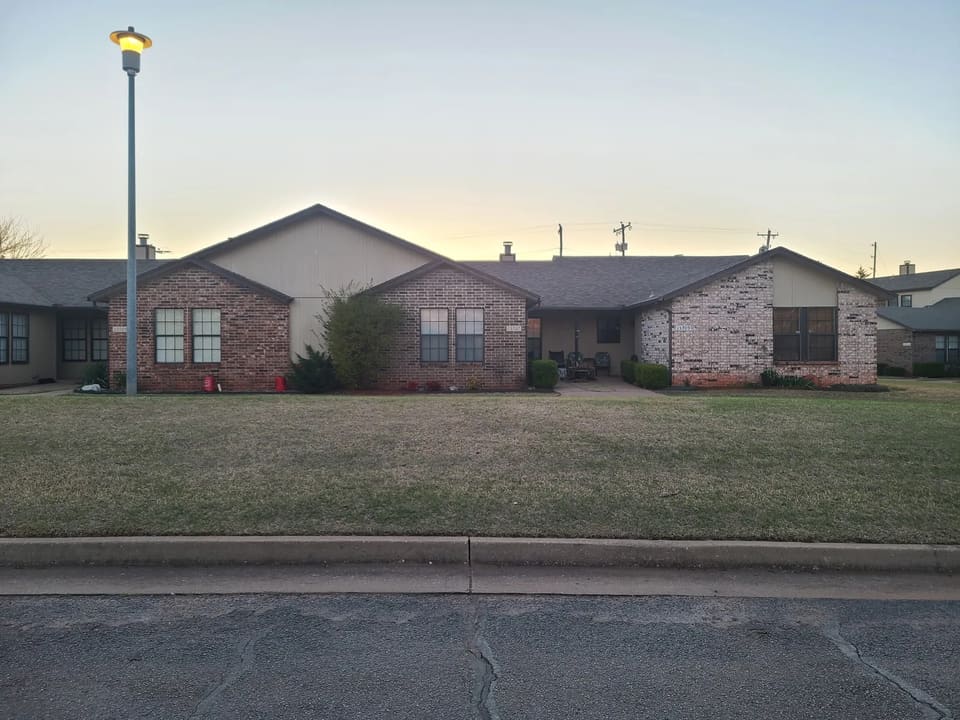
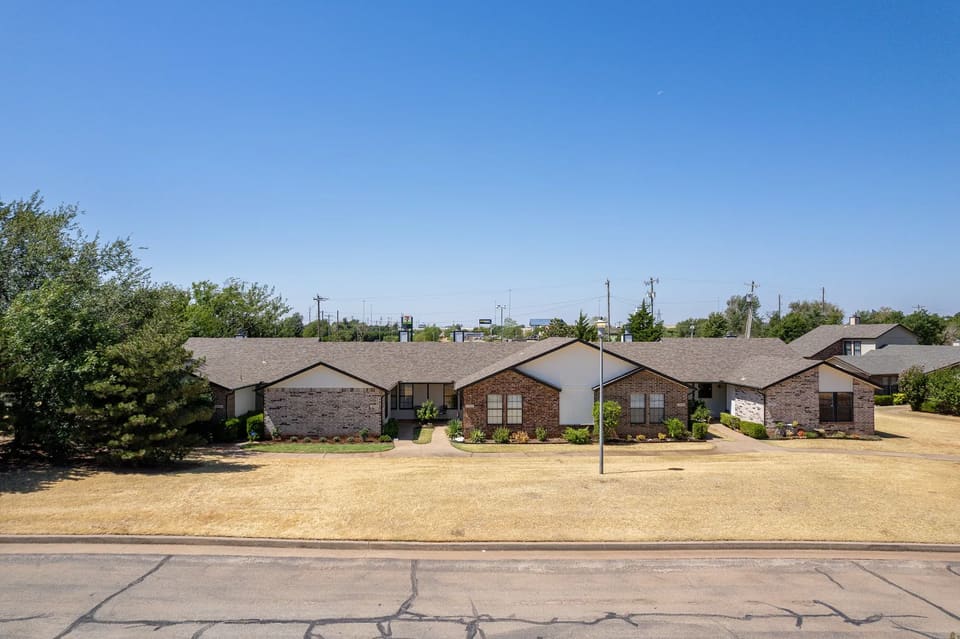
The befores are from our first visits, when the whole property wore the same faded tan it had carried for years. The afters are the same community in its new two-tone scheme.
The Quote That Was 30% Cheaper Than Ours
The board told us afterward that one of the other bids came in around 30% below ours. They went with us anyway, because they believed we would be more professional than the other company.
That word, professional, can sound like empty marketing until you see what it means on a two-month job in an occupied community. It meant a signed contract with minimum weekly updates, which in practice became check-ins every other day during the busy stretches. It meant every change order in writing before the work happened. And it meant that when something came up, the board was never left guessing.
Two Months Among the Residents
Our stated goal to the board was simple: run this job so that the board has almost nothing to handle. People lived in every one of these units the entire time. They parked in the garage courts we were painting and walked past our crew on the way to their cars.
One especially kind resident let us use her garage for storage and staging for the duration of the job, which saved everyone from a materials pile on the common ground. She got a box of cookies from us when we finished, and she earned it.
Over the whole two months, exactly one complaint reached the board. I called that resident personally, listened, and documented her concerns. A couple of items I relayed to my project manager on site and had corrected the same day. One item took some back and forth to figure out the right fix, and we stayed on it until it was resolved. One phone call, on a job of this size, is the kind of number we work for.
What We Found Under the Siding
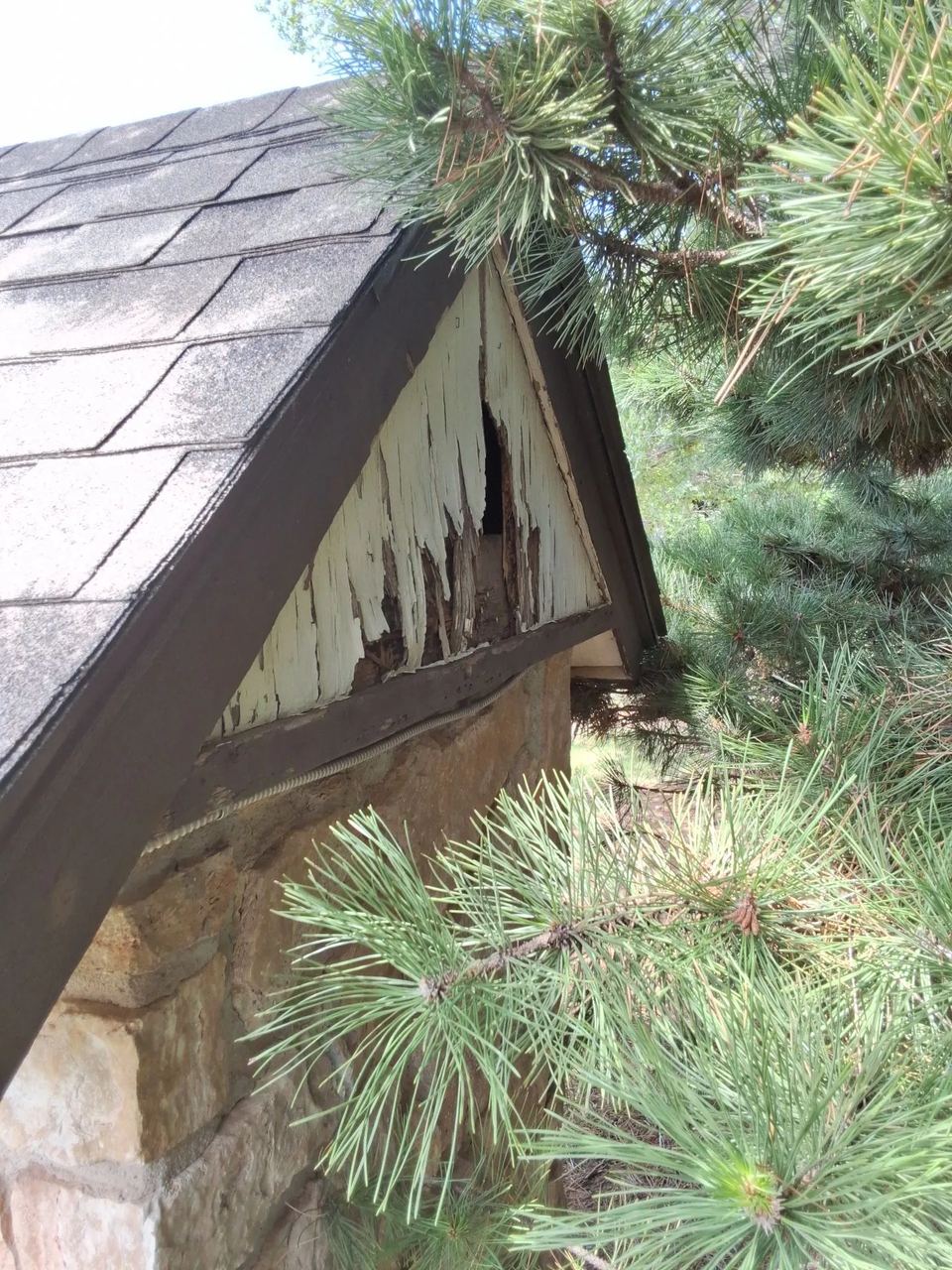
Repaints on older buildings always uncover something, and a good contractor plans for it. Our scope included wood repair in multiple locations, replacing failed trim and siding before any paint went on.
Then, in one wall, we opened up the siding and found termite damage underneath. We stopped, documented it, and took it to the board for approval before touching anything further. Once they signed off, we repaired the inside of the wall, replaced the siding over it, and resumed painting. Every step of that, like every change order on this job, was in writing. A surprise inside a wall is a problem. A surprise on an invoice is a much worse one, and the board never got the second kind.
What It Cost
This project came in at around $5,000 per unit. That covered a two-story, siding-heavy structure in a two-tone color scheme, with its share of the detached garage buildings included. Wood repairs and the termite work ran as documented change orders on top of the base scope.
Every property is different, and HOA boards comparing bids should make sure every quote covers the same scope. A number that looks great on page one can get expensive by the final invoice if prep and repairs aren’t spelled out.
What This Job Says About How We Work
- The cheapest bid is a bet, and boards know it. This board paid more than they had to and got a job that generated one phone call in two months. That math tends to work out.
- Your board should not have to be the project manager. Contracted weekly updates, a dedicated project manager on site, and the owner on the phone when it matters. That structure is the product, as much as the paint is.
- Surprises get documented, approved, and fixed, in that order. From routine trim replacement to termite damage inside a wall, nothing happened without board approval in writing.
- Phasing is a feature. A building-by-building plan let this HOA start now and budget the rest. The next buildings will match, because the scheme and the products are on file.
Is Your HOA or Commercial Property Due?
Start with our commercial painting page for how we handle multi-unit and commercial work, or see our painting services in Edmond.
Or skip straight to a conversation about your property.